Last week, I was looking at a client’s Search Console and noticed something strange. Their rankings for a high-competition keyword jumped from page 4 to the top 3 in forty-eight hours. There were no new high-authority backlinks. No massive content update. So, what happened?
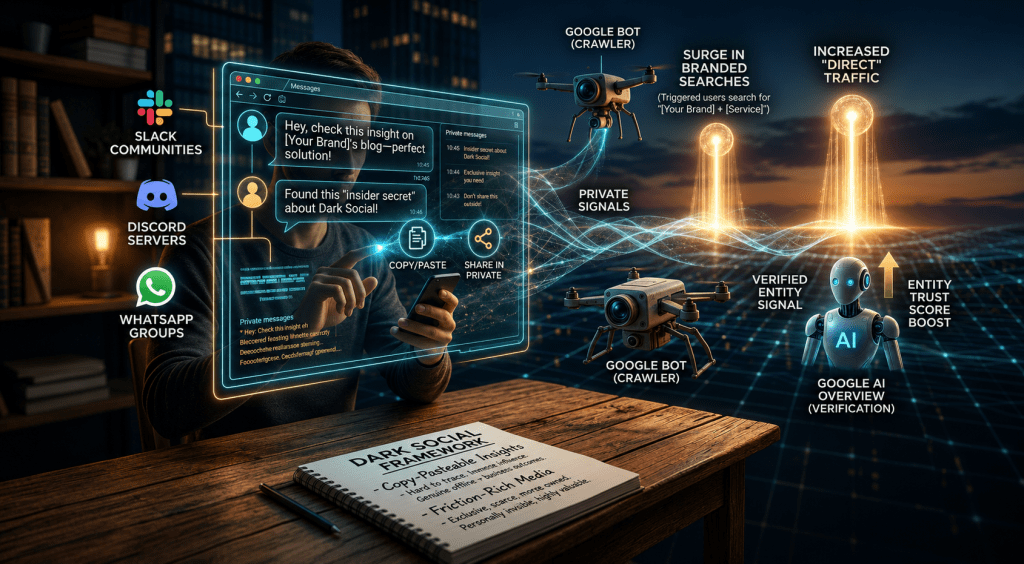
The answer lies in what we call “Dark Social.” It’s the conversations happening in Slack communities, Discord servers, and WhatsApp groups. In 2026, Google has become obsessed with these private signals because they are impossible to fake with bots. When people share your link privately, it eventually triggers a surge in “Direct” traffic and branded searches—two things the Google Bot now uses to verify if you’re a real authority or just an SEO construct.
Why My Team Stopped Chasing “Perfect” Anchors
Early in my career, I was obsessed with exact-match anchors. I wanted every link to say exactly what I was trying to rank for. Today, that’s a red flag. From my experience, the most powerful links are the ones that look “messy.”
When we execute a Professional Crowd Marketing Strategy, we don’t just drop a link with a keyword. We drop a link because it solves a specific problem in a sub-reddit or a specialized forum. Often, these links don’t even have “SEO-friendly” anchors. But they drive real humans. Google sees this human behavior—the click-through rate, the time spent on page—and realizes that your site is a trusted resource in the “Dark Social” sphere.
The “Verified Entity” Signal
In 2026, Google’s algorithms are looking for a “Digital Footprint” that extends beyond the reach of standard crawlers. If you are mentioned in a private community, it often leads to what we call “Search Echoes.” Someone sees your brand in a private Telegram group, then goes to Google and searches for “[Your Brand] + [Service].”
This specific sequence is the ultimate proof of Entity Trust and Information Gain. It tells Google: “This site isn’t just a collection of keywords; it’s an entity people discuss behind closed doors.” To trigger this, your content needs to be “shareable in private.” This means moving away from generic advice and moving toward “insider secrets” that people feel like they’ve “discovered” on your blog.
How to Optimize for the Invisible
You can’t “buy” Dark Social, but you can facilitate it. Here is the framework I use:
- Focus on “Copy-Pasteable” Insights: I always include one unique chart or a “controversial” takeaway that is easy to copy and paste into a Slack channel.
- Use Tools to Track the Untrackable: While Google Analytics struggles with Dark Social, I use Google Search Console Insights to look for spikes in branded search volume that correlate with our community outreach campaigns.
- The “Human Friction” Factor: I deliberately leave “Easter eggs” in my articles—small, unique details that provoke questions. When a reader asks a question about a detail in a forum, it creates a natural discussion thread that Google loves.
The Shift from URL to Brand
If your entire SEO strategy is built on open-web backlinks, you are vulnerable. The winners in 2026 are those who understand that a link is just a digital handshake. The real deal happens in the conversation. By combining strategic crowd marketing with content that actually deserves to be shared privately, you create a defensive moat around your rankings that no AI-generated site can touch.
Stop building links for bots. Start building authority for people who talk when no one (except Google’s AI) is listening.


 Crowd Groups
Leave a comment